

What Is Shilajit? The Ancient Himalayan Resin Transforming Modern Wellness
In Ayurvedic tradition, shilajit has been called the destroyer of weakness and the conqueror of mountains — and researchers are now beginning to explore why this ancient substance has been so widely valued.
If you’ve recently come across shilajit and wondered what all the fuss is about, you’re not alone. This ancient, tar-like resin has been a cornerstone of Ayurvedic and traditional mountain medicine for over 3,000 years — and it’s now experiencing a powerful renaissance in the modern wellness world. This guide covers everything you need to know: what it is, what early research suggests, how to use it, and how to make sure what you’re buying is actually pure.
The Basics: What Exactly Is Shilajit?
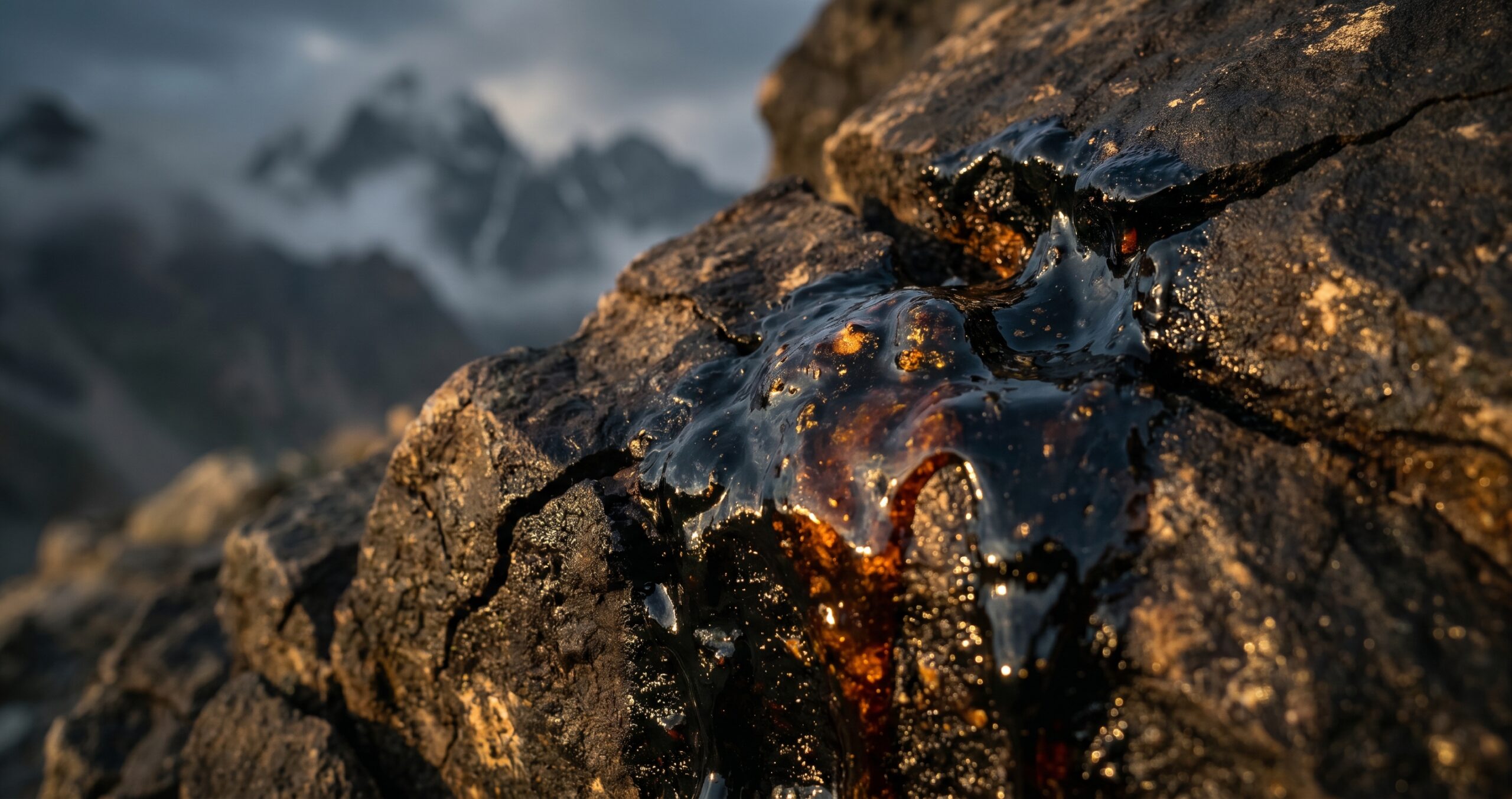
Shilajit (pronounced shee-lah-jeet) is a thick, resinous substance that seeps from cracks in Himalayan and other high-altitude mountain rock formations. Over millions of years, decomposed plant matter — particularly ancient plant life and microbial activity — gets compressed by layers of rock under intense heat and pressure. The result is a dense, mineral-saturated resin that slowly oozes to the surface during warm summer months.
The word itself comes from Sanskrit: shila meaning rock, and jit meaning conquered or won. Literally: that which conquers rock. It has been used in traditional Ayurvedic, Unani, and Siberian folk medicine for over 3,000 years.
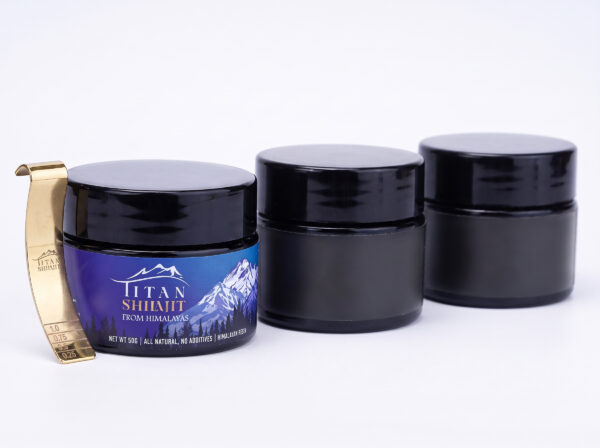
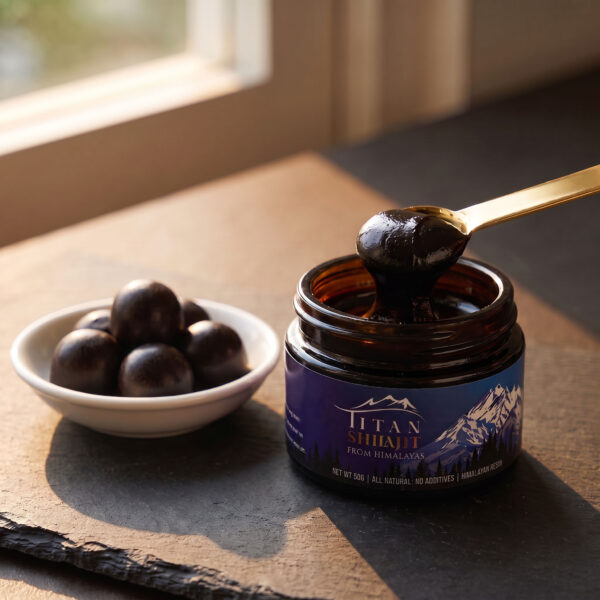
In its raw form, authentic shilajit is a dark brownish-black resin with a distinctly bitter, earthy taste and a tar-like consistency. Pure shilajit should soften between your fingers when warmed and dissolve completely in warm water — two hallmarks of genuine, uncut resin. You can explore our Titan Shilajit Pure Resin (50g) to see what authentic Himalayan resin looks and feels like.
Shilajit is not a herb, not a mineral, and not a fungus. It is a category entirely its own — a rare bio-mineral exudate with no real equivalent in the natural world.
The Science Behind the Substance
What makes shilajit so interesting from a biochemical standpoint is its complexity. Laboratory analysis consistently identifies a substance containing a unique combination of compounds not commonly found together in nature:
Fulvic Acid
The primary active compound in shilajit. Fulvic acid is a naturally occurring electrolyte and organic acid studied for its role in cellular nutrient transport. Some researchers suggest it may support the body’s ability to absorb minerals and nutrients from food and supplements, though further research is ongoing.
Humic Acid
A complex organic compound found in soil and decomposed organic matter. Humic acid is present in shilajit in meaningful quantities and is studied for its potential role in supporting digestive and general wellness. It works alongside fulvic acid to form shilajit’s distinctive biochemical profile.
80+ Trace Minerals
Including zinc, magnesium, iron, copper, selenium, and manganese — minerals that play important roles as cofactors in the body’s normal metabolic processes. Many people find it difficult to consistently obtain trace minerals through diet alone, particularly with modern farming and food processing.
Dibenzo-α-pyrones
Rare antioxidant compounds found almost exclusively in shilajit. These molecules have been studied in relation to mitochondrial function and cellular energy metabolism, though research is still developing.
What Does the Research Suggest?
Shilajit has been the subject of a growing body of scientific research. The following is a summary of what preliminary studies have explored — not a list of confirmed medical benefits. Individual results will always vary.
Energy Levels and Physical Performance
Some preliminary studies have explored the relationship between shilajit supplementation and physical energy. A study published in the Journal of the International Society of Sports Nutrition investigated shilajit’s potential role in supporting CoQ10 levels and exercise-related fatigue, with participants reporting differences in perceived exertion. This research is early-stage and more studies are needed to draw firm conclusions.
Men’s Wellness and Vitality
Some small clinical studies have investigated shilajit’s effects on testosterone levels in men. A study published in Andrologia observed changes in testosterone markers in a group of male participants over 90 days of supplementation. These findings are preliminary, conducted on small sample sizes, and individual results will vary.
Cognitive Wellness
Fulvic acid has been explored in preclinical laboratory research in the context of brain health and cellular ageing. This research is at an early stage and has not been confirmed in large-scale human trials.
Mineral Support
Due to its high mineral content, shilajit has been studied for its potential to support dietary mineral intake as part of a balanced diet. People with diagnosed mineral deficiencies should always work with a healthcare provider.
Antioxidant Properties
Laboratory studies have explored the antioxidant activity of shilajit’s compounds. Antioxidants are naturally occurring substances found in many foods and supplements, and much of the research in this area is still ongoing.
Where Does Shilajit Come From?
Not all shilajit is the same — and the source matters enormously.
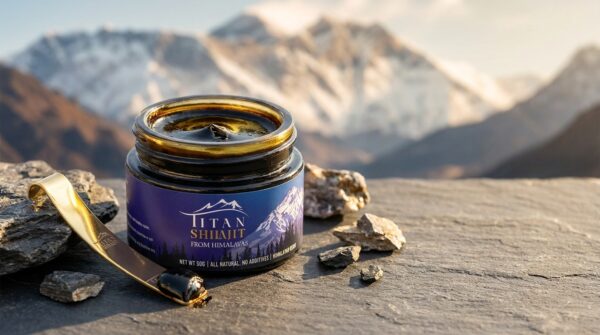
The Himalayas are widely considered to produce the highest-quality shilajit in the world. At altitudes above 3,500 metres, the unique combination of ancient geological deposits, extreme temperature variation, and specific mountain flora creates a resin of notable mineral density. The Altai mountains of Siberia, the Hindu Kush, and the Caucasus also produce shilajit, though the mineral profiles differ significantly by region.
Our Titan Shilajit Pure Resin is sourced exclusively from pristine Himalayan formations — far from industrial activity, pollution, and human settlement — to ensure the resin retains its full natural mineral profile.
Raw vs. Processed: Why Extraction Method Matters
A large percentage of commercial shilajit products are processed using high heat or chemical solvents to accelerate extraction and increase yield. High heat can degrade fulvic acid and affect temperature-sensitive compounds — the extraction method directly impacts what ends up in the final product.
Heat Extraction
Fast and inexpensive, but may degrade fulvic acid content and affect the resin’s natural biochemical profile. Widely used in mass-market supplements.
Chemical Solvent Extraction
Can increase yield but may introduce residual solvents into the final product — something no quality supplement should contain.
Cold Water Extraction (Sun-Dried)
The traditional method, used for thousands of years. Slow and lower-yield, but preserves the natural profile of the raw resin without introducing heat or chemicals. This is the method we use at Titan Shilajit — natural sunlight evaporates moisture gradually, leaving the resin’s composition as close to its natural state as possible. Explore our cold-extracted Himalayan resin here.
How to Use Shilajit: A General Guide
Suggested Amount
A pea-sized amount of resin (approximately 300–500mg) once or twice daily is a commonly used starting point. Begin with a smaller amount for the first few days and gradually increase. Always follow the usage guidance on the product label.
How to Take It
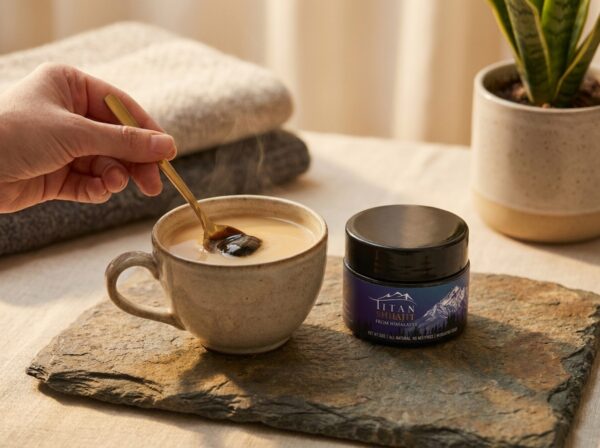
Dissolve your portion of Titan Shilajit resin in warm (not boiling) water, milk, or herbal tea and drink immediately. Pure resin dissolves fully within about 30 seconds of stirring. Many people take it in the morning; others prefer warm milk in the evening, a preparation common in Ayurvedic tradition.
What to Expect
Shilajit is not a stimulant. Individual experiences vary — some people notice subtle changes in how they feel within a few weeks; others take longer. Consistency over time matters more than short-term use, and results are not guaranteed.
How to Verify Your Shilajit Is Pure
The shilajit market includes a wide range of product quality. Here are practical ways to check what you have:
- The flame test — Pure shilajit resin will not ignite. It may bubble slightly near heat, but will not catch or sustain a flame.
- The water test — Authentic resin dissolves completely in warm water, leaving no sediment and turning the water a uniform amber-brown.
- Texture — Real resin is firm at room temperature and softens noticeably when held in warm fingers. Uniform texture regardless of temperature is a warning sign.
- Third-party Certificates of Analysis (CoA) — A trustworthy brand should provide independent lab reports confirming fulvic acid content, heavy metal screening, and microbial safety. Titan Shilajit’s products are third-party tested — view our product details here.
Who Should and Shouldn’t Use Shilajit
Generally Considered Suitable For
Most healthy adults — both men and women. Commonly used by those interested in supporting general wellness, energy levels, and an active lifestyle as a dietary supplement alongside a balanced diet.
Not Recommended For
Shilajit is not recommended during pregnancy or breastfeeding. Those with haemochromatosis (iron overload), active gout, kidney conditions, or who take prescription blood-thinning medications should consult their doctor before use. If you have any health condition, always seek guidance from a qualified healthcare professional first.
The Bottom Line
Shilajit is a genuinely fascinating natural substance with a long history of use in traditional wellness practices and a growing body of early scientific research behind it. As with any supplement, quality matters enormously — what you buy, where it comes from, and how it was processed will determine what you actually get.
If you’re curious to try it, start with a pure, cold-extracted, third-party tested source, be consistent, and give it adequate time. Talk to your doctor if you have any health concerns before adding any new supplement to your routine.
Interested in trying pure Himalayan shilajit? Titan Shilajit is cold-extracted, sourced from the Himalayas, and third-party tested for purity and safety. Nothing added, nothing taken away.
Disclaimer: These statements have not been evaluated by the Food and Drug Administration (FDA). This product is not intended to diagnose, treat, cure, or prevent any disease. The content of this article is for educational and informational purposes only and is not a substitute for professional medical advice, diagnosis, or treatment. Always seek the advice of your physician or other qualified health provider before starting any new supplement.