

Shilajit Resin vs Gummies vs Capsules: Which Format Is Closest to the Real Thing?
The shilajit resin vs gummies question comes up constantly, and it usually gets answered badly — either by resin sellers dismissing every other format, or by gummy brands pretending the difference is only about taste. The honest answer is more interesting than either, and it comes down to one question: how much has the material been changed between the mountain and your mouth?
Four formats dominate the shelf. Here is what each one actually is, what it costs you, and what it buys you.
Resin: the raw material, purified
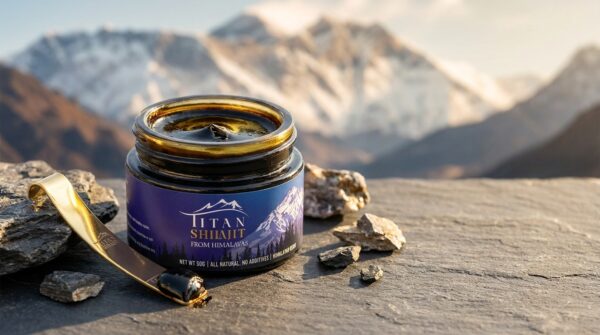
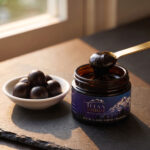
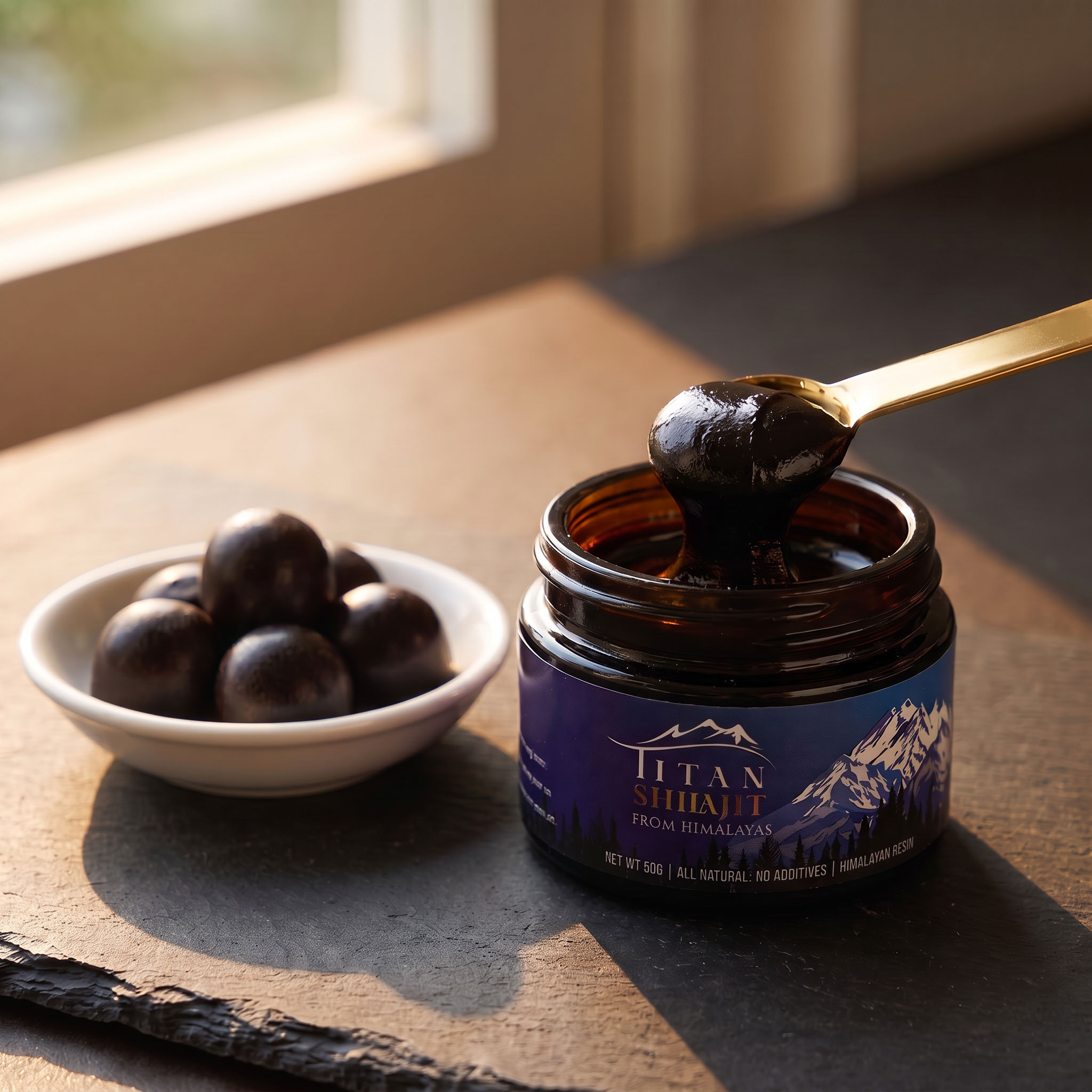
Shilajit resin is the closest thing to the substance as it exists in the rock. Raw shilajit is collected, dissolved, filtered to remove soil and plant debris, and dried back down. Nothing is added. What ends up in the jar is the same material that came off the mountain, minus the parts you would not want to eat.
That is the entire case for resin, and it is a strong one. There is no carrier, no binder, no sweetener, no capsule shell, and no filler taking up space in the serving. When a resin is tested at 83% fulvic acid, that figure describes the thing you are actually swallowing rather than one ingredient among eight.
The trade-offs are real. Resin tastes strongly bitter and mineral. It has to be scooped and dissolved rather than swallowed. Dosing is done by eye rather than by count. And a dense resin takes a moment of effort with the spoon. These are genuine inconveniences, and they are the price of the format.
Gummies: the most changed, and the most pleasant
A gummy is a confection that contains shilajit. To make one, you need pectin or gelatin, a sweetener, an acid, a flavouring, and usually a colour. The shilajit is a minority ingredient by weight in almost every gummy on the market.
This matters more than it sounds. Gummy labels often quote impressive milligram figures, but those numbers frequently describe a blend rather than shilajit alone, and many shilajit gummies are formulated with additional botanicals sharing the same total. Read the supplement facts panel rather than the front of the pack, and check whether the shilajit figure is stated separately.
What gummies buy you is real, though, and worth stating plainly. They taste good. They require no measuring, no spoon, and no warm liquid. Every gummy contains the same amount, which makes dosing consistent in a way that scooping never quite is. For someone who would otherwise skip the supplement entirely because of the taste, a gummy taken daily beats a resin sitting unused in a cupboard.
Capsules: the middle ground
Capsules typically contain shilajit that has been dried and powdered, then encapsulated. The shilajit content is usually much higher as a proportion than in a gummy, because the only other component is the shell and whatever flow agent was needed to fill it.
They solve the taste problem completely and keep dosing exact. The question worth asking a capsule brand is what the powder inside actually is: shilajit extract standardised to a stated fulvic acid percentage, or shilajit powder blended with a bulking agent. Those are very different products at similar prices.
Powder: convenient, and the hardest to verify
Shilajit powder dissolves faster than resin and mixes easily into drinks. The difficulty is that powder is the format where adulteration is least visible. Resin has a texture, a smell, and a dissolve behaviour you can judge. A brown powder looks like every other brown powder.
If you buy powder, third-party lab documentation stops being a nice-to-have and becomes the only thing standing between you and a jar of something else.
Shilajit resin vs gummies: a side-by-side
| Format | Closeness to raw form | Other ingredients | Dose accuracy | Taste |
|---|---|---|---|---|
| Resin | Highest | None | By eye | Strong, bitter |
| Capsules | High | Shell, flow agent | Exact | None |
| Powder | High | Varies | By scoop | Noticeable |
| Gummies | Lowest | Sweetener, gelling agent, flavour, colour | Exact | Pleasant |
So is resin actually more natural?
Yes, in the specific and useful sense that it has been altered less. Resin is purified raw material. Every other format takes that material and adds something to it, whether a capsule shell or a full confection recipe. That is a factual difference in processing rather than a marketing claim.
What it is not is an automatic guarantee of quality. A poorly purified resin with high moisture content and no lab testing is a worse product than a well-formulated capsule from a brand that publishes its results. Format sets the ceiling. It does not set the floor.
The practical version: pick the format you will actually use consistently, then judge the specific product on evidence rather than on category. Ask for the fulvic acid percentage. Ask whether testing is per batch. Ask what else is in the serving.
Where Titan Shilajit sits
We make resin, so our bias is on the table. What we can put behind it: our Himalayan shilajit resin is third-party lab tested and batch tested in the USA, and the most recent report measured fulvic acid at 83.30%. That is the whole product, not a fraction of a blend.
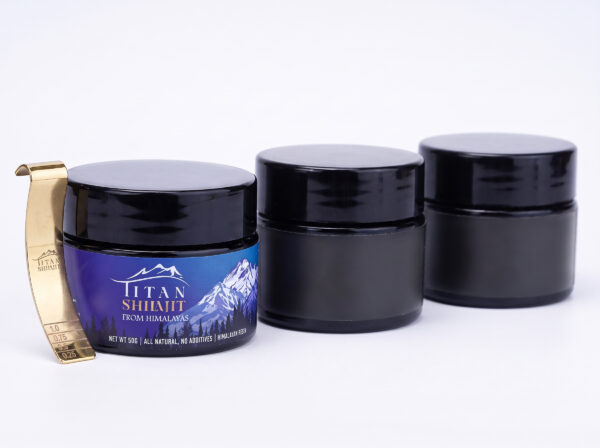
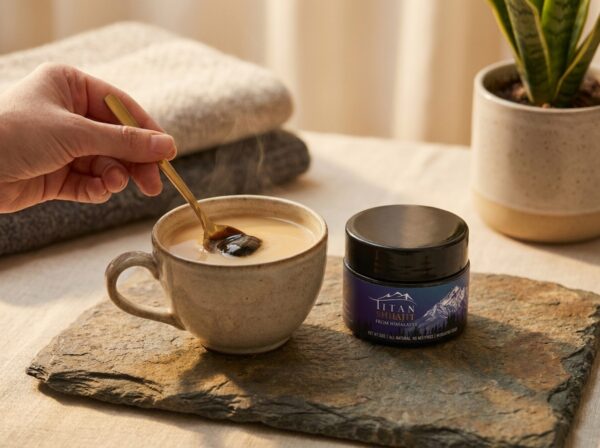
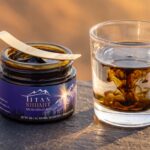
It is sun-dried over several weeks rather than heat-processed, arrives dense and firm at room temperature, and dissolves clean in warm water, tea, or milk with nothing left at the bottom of the glass. Each 50g glass jar ships with a gold-plated spoon, because a resin this firm defeats a plastic one.
If the taste or the scooping is a dealbreaker for you, a well-tested capsule is a reasonable choice and we would rather you took something consistently than nothing at all. But if you want the material with the least between you and it, that is what resin is for.
Frequently asked questions
Shilajit resin vs gummies: which is better?
Resin is closer to the raw purified material, with no sweeteners, gelling agents, or flavourings taking up the serving. Gummies are easier to take and dose consistently, but shilajit is a minority ingredient by weight in most of them. If you will take either reliably, resin gives you more of the actual material.
Is shilajit resin more natural than other formats?
It is less processed. Resin is raw shilajit that has been filtered and dried, with nothing added. Capsules add a shell, powders may add bulking agents, and gummies add a full confection recipe. That said, format alone does not guarantee quality — an untested resin can be worse than a well-documented capsule.
Why do shilajit gummies list such high milligram amounts?
The figure on the front of the pack often describes a blend rather than shilajit alone, and many gummies combine shilajit with other botanicals under one total. Check the supplement facts panel to see whether the shilajit amount is stated separately.
How do I dose resin without a pill count?
A portion roughly the size of a grain of rice, dissolved in warm water, tea, or milk once daily. A graduated measuring spoon makes this considerably more consistent than estimating by eye.
What should I ask a brand regardless of format?
Three things: the measured fulvic acid percentage, whether testing is done per batch by an independent laboratory, and what else is in the serving besides shilajit.
These statements have not been evaluated by the Food and Drug Administration. This product is not intended to diagnose, treat, cure, or prevent any disease.