

Why Does Shilajit Taste So Different Between Brands?
If you ask five people who use shilajit what it tastes like, you’ll get five different answers. One describes it as sharply bitter and mineral, almost smoky; another says that theirs is mild, slightly sweet, and barely noticeable when poured into tea. Both refer to actual products known as shilajit. The difference lies not in the resin itself, but in what it went through before it got into the jar.
Raw shilajit has a bitter taste. That is the standard.
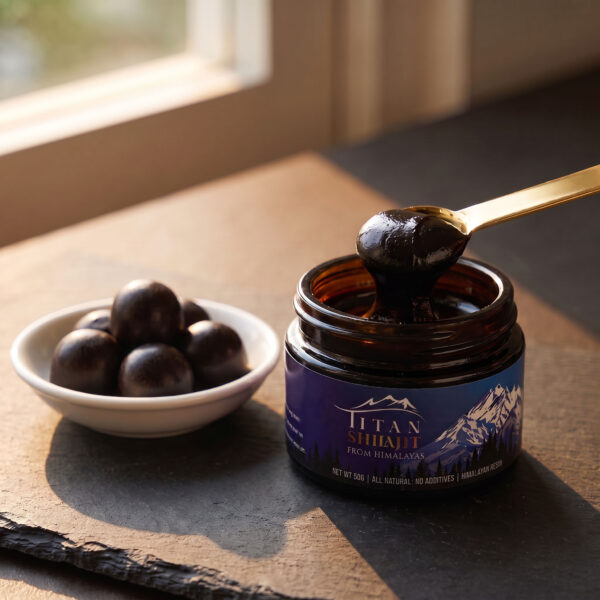
Pure shilajit resin is naturally very bitter and has a mineral taste; this flavor comes from the same substances that give the product its value—fulvic acid, humic acid, and trace minerals carried over from the original material. You can’t separate the compounds from the taste, since they are the same.
Strong bitterness in a resin is not, in itself, a cause for concern, since it better reflects the taste of unprocessed, unmasked shilajit. The right question is not ‘why is this one bitter?’ but ‘why is the other one not?’
The method of purification matters more than the level of purity.
Before it is sold, Shilajit must be purified. The raw material, collected from the rock, is filtered to remove soil, plant matter, and insoluble debris, then reduced to a stable resin. How this purification takes place affects the flavor as much as it affects purity.
Sun-drying at ambient temperature over several weeks is the slower method and leaves the resin’s compounds largely unchanged, so the bitterness remains intact along with the other qualities. Fire-heating drying is quicker and cheaper to do on a large scale. It can partially break down some compounds during the process, resulting in a milder taste without necessarily making it better. Speed doesn’t mean something is worse, and slowness isn’t automatically superior in every respect. Yet it is a real difference, and most labels fail to mention it.
Format is the bigger factor.
If you compare resin with shilajit honey sticks—a format that has grown rapidly because it directly addresses the taste issue—a honey stick is not simply shilajit that happens to taste sweet. It is shilajit mixed into honey, with the honey acting as a sweetener strong enough to mask the bitterness beneath. This trade-off makes sense when taste is the main obstacle to taking the supplement consistently. The honey stick is also a different product from resin, since shilajit is just one of two ingredients in it.
The gummies go as far in that direction as well. Alongside the shilajit, there are pectin or gelatin, a sweetener, an acid, a flavoring, and a color, and the shilajit is generally the smallest part by weight. With capsules, the problem of taste is mostly eliminated by removing it altogether, even though this means you can’t see or assess the material inside.
This does not mean the format is incorrect; it explains why the statement ‘mine tastes better than yours’ is usually not a comparison of purity at all. It compares formats, and the two products might not be measuring the same thing.
Even within resin, taste varies.
Two pure, additive-free resins can still taste noticeably different from each other, for reasons that have nothing to do with quality:
- Altitude and mineral composition of the specific collection site
- How long the resin was purified and how many filtration passes it went through
- Final moisture content, which affects concentration and therefore intensity
- Storage conditions and age, since flavor intensity can shift slightly over time
That is why two resins with the same ingredient list and both genuinely pure can still taste different when eaten. Taste alone is not a reliable way to decide which of two resins is purer. On the other hand, it is a reasonable way to determine whether something has been diluted or mixed, since additives alter flavor in particular, identifiable ways.
What a milder taste can mean, and what it usually does not
A resin that is either quite mild or very slightly sweet, which is marketed simply as resin rather than in honey or gummy form, is worth examining further. This could indicate a different purification process as mentioned above, or it might mean that a sweetening agent not clearly listed has been added, or that the compounds responsible for the taste are present in a lower concentration.
You can’t tell the difference just by tasting it. Check the label for anything listed besides shilajit, and see whether the manufacturer provides a fulvic acid percentage based on tests by an independent lab. A specific, numbered figure from independent lab testing settles the issue that taste alone can’t resolve.
Where Titan Shilajit sits
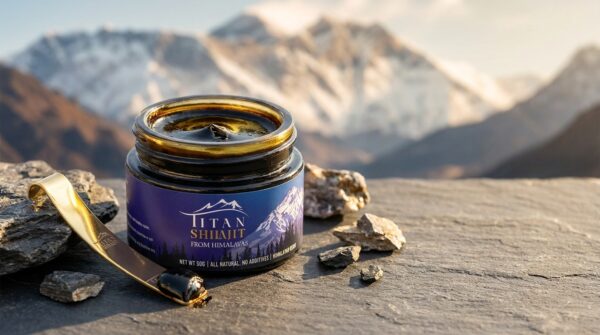
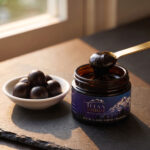
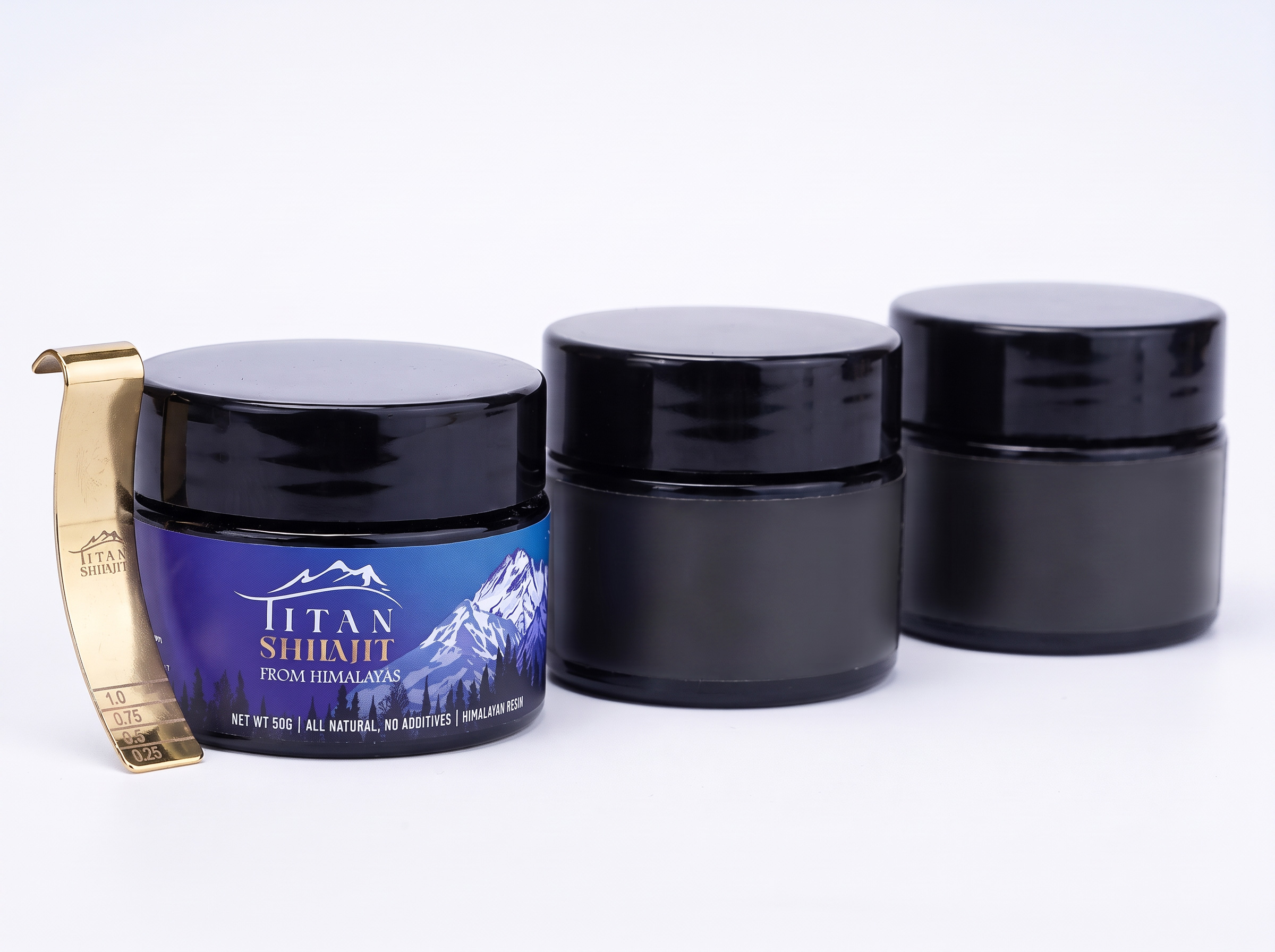
The resin is left to dry in the sun for several weeks rather than being heat-processed, and it has the flavor of purified shilajit resin—strong and mineral with a bitter taste. We have not attempted to soften it because softening it generally involves altering the resin itself.
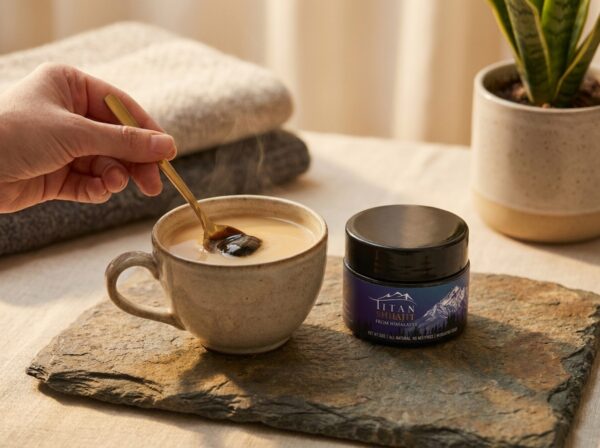
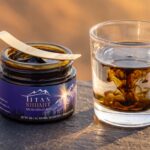
Instead, choose the one that has been documented. An independent laboratory in the United States tests each batch, and the most recent report showed 83.30% fulvic acid, along with a heavy-metal analysis. If the bitterness puts you off, then purchase the resin and mix it into warm milk or strong tea to reduce the sharp taste without altering what is in the jar.
Frequently asked questions
Why does shilajit taste different between brands?
Different brands get shilajit from different places and process it differently. The source, how they clean it, and how they pack it all affect its taste. Some brands might mix in other things or use fillers, which can also change the flavor.
The main difference lies in processing and form. The purification method—sun-drying or fire-drying—affects flavor intensity. Still, form matters more: resin has full bitterness, whereas honey sticks, gummies, and some capsules contain sweeteners or other ingredients that mask it. Two pure resins can also taste different because of where they are sourced and their moisture content, even if neither is lower quality.
Is bitter shilajit better than mild shilajit?
It doesn’t have to be, but bitterness is nearer to the basic flavor of purified resin. If a resin is very mild and marketed as plain resin, check whether any sweeteners have been added or whether the concentration of active compounds is low. A milder taste is expected in a honey stick or gummy, since these forms intentionally contain other ingredients.
What makes shilajit honey sticks taste sweet?
Since shilajit is blended into honey and honey is intended to be the main flavor, this is a valid way to make shilajit easier to take, even though it means the product is a blend, not resin on its own.
What can I do to make shilajit resin less bitter?
Mix it with warm milk or a strongly flavored tea instead of plain water. While it doesn’t get rid of the bitterness, it reduces it considerably without altering the resin.
Can taste alone tell me if shilajit is pure?
Not reliably on its own. Taste can flag an obvious additive, but two genuinely pure resins can taste different. A published fulvic acid percentage from independent lab testing is a more reliable purity check than taste alone.
These statements have not been evaluated by the Food and Drug Administration. This product is not intended to diagnose, treat, cure, or prevent any disease.