


How to Store Shilajit Resin at Home
Shilajit resin is much more stable than most natural products. It doesn’t spoil like food, and it has no set expiration date, so why is it important to know how to store shilajit resin? Many people think they can store it in any way they want. In reality, storage matters more than most labels suggest, just not in the way you might expect. Poor storage will not make shilajit unsafe, but it will reduce its quality.
The three things that actually degrade it
Heat, light, and moisture are the three main things that affect shilajit, each in its own way.
- Heat softens the resin. Over time, repeated heat exposure can start to break down the fulvic and humic compounds that make shilajit valuable.
- Light, especially UV light, slowly breaks down those same compounds. That is why shilajit is usually sold in dark or amber glass instead of clear containers.
- Moisture is the biggest problem. Shilajit is hygroscopic, so it draws moisture from the air. If the resin absorbs too much water, it can develop mold, but a dry resin will not.
None of these factors will ruin a jar overnight. Their effects build up over time, so good storage habits are more important than worrying about a single mistake.
Where to keep it – How to store shilajit resin
The best place to store shilajit is in a closed cupboard or drawer, away from the stove, radiator, or sunny windowsill. Most recommendations suggest keeping it between 15 and 25°C (59 to 77°F), which is about the same as a typical kitchen cabinet in most homes.
It is best to avoid storing shilajit in a bathroom cabinet, even though many people keep other supplements there. Bathrooms get humid every time you shower, which increases the risk of moisture getting into the resin.
Refrigeration: helpful if your home stays hot or humid, not required
Refrigeration is strongly recommended if your home is always hot or humid. Keep shilajit in a fridge to slow the effects of heat and moisture. At an average room temperature of 25 degrees Celsius, refrigeration is not needed. Freezing isn’t helpful, as it can alter moisture-dependent compounds.
If you do refrigerate shilajit, let the jar warm up to room temperature before opening it. Opening a cold jar in warm, humid air can cause condensation inside, adding unwanted moisture.
Why resin gets harder or softer, and why that is normal
Cold butter and honey both do this: stiff from the fridge, loose on a warm counter, same jar either way. Shilajit resin behaves the same way. A jar that felt stiff in January and pliable in July hasn’t changed — the room around it did.
That is why low-moisture, gold-grade resin is usually firmer than softer resin, no matter the temperature. We have explained before that firmness is a sign of purity, not a flaw. Storage temperature and the resin’s natural density are different things. A resin can be naturally firm but still soften if your kitchen is hot.
Amber Glass and a Dry Spoon
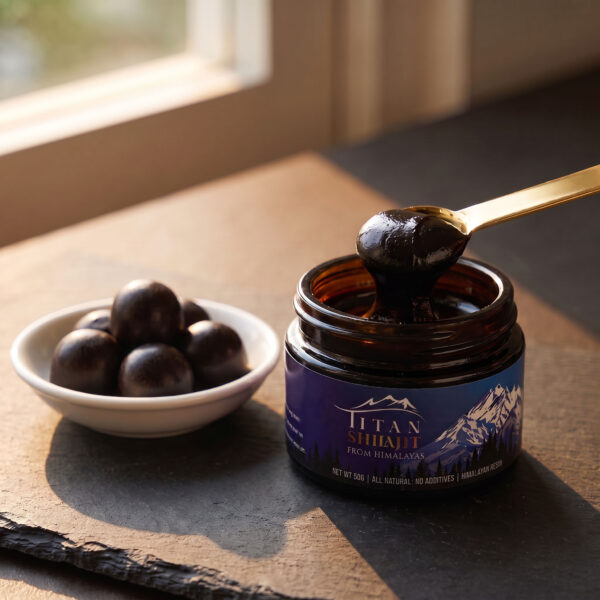
Amber glass isn’t decorative. It’s the same reason beer comes in brown bottles instead of clear ones — certain light wavelengths break down what’s inside, and dark glass blocks them. Keep the lid shut tight between scoops. Every time it sits open, the surface dries out a little faster than the rest, and once that happens, it doesn’t loosen back up on its own.
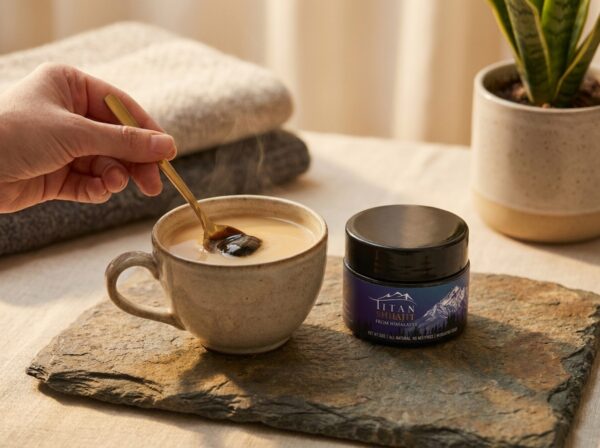
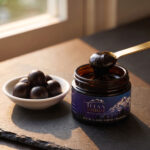
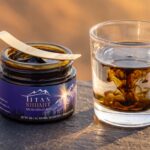
Always use a completely dry spoon. A wet spoon is the most common way moisture gets into the jar, since it touches the resin directly. Even putting away a rinsed, slightly damp metal spoon can cause problems. This is the critical thing to take care of, which answers the core knowledge part of the main question of how to store shilajit resin.
If your jar gets low use
Each time you open the jar, a little air gets in and out. This is not a big deal if you use the jar daily and finish it within a few months. If you buy in bulk or use shilajit rarely, transfer a small amount to another container for regular use. Keep the main supply sealed and untouched to limit air exposure.
Signs something has actually gone wrong
It is normal for the resin to get firmer or softer with changes in the weather. However, these things are not normal:
- Visible mold, fuzzy spots, or a distinctly musty smell replacing the normal mineral aroma
- A sudden, sharp change in smell or color unrelated to temperature
- Standing liquid or visible water inside the jar
If you notice any of these signs, moisture has gotten into the resin, and you should not use it. This does not happen often if you store it properly, and it is usually caused by a wet spoon or a loose lid.
Where Titan Shilajit sits
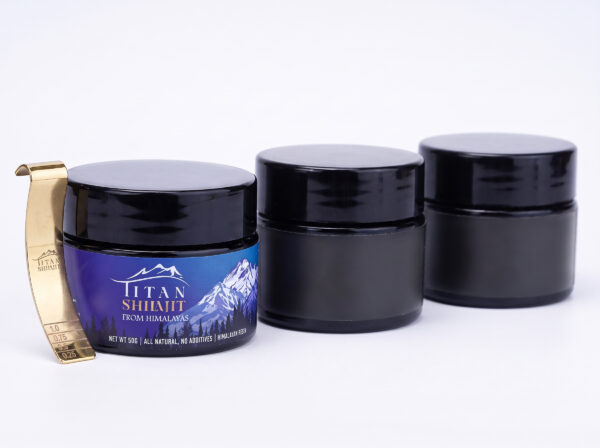
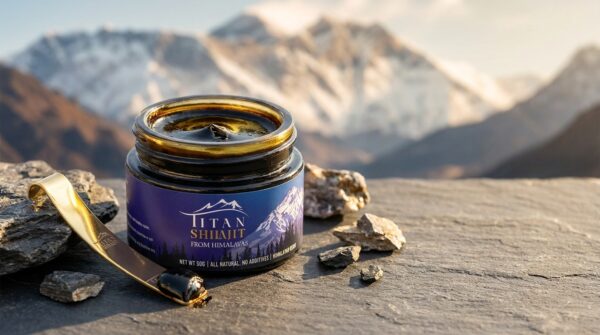
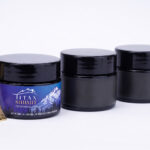
Our jar is dark glass with a gold-plated spoon, and neither was an afterthought. The glass keeps light off the resin, and the spoon dries faster than the plastic ones we tried first — plastic held onto moisture around the edges in a way metal doesn’t. Beyond that, ours follows the same rules as any shilajit jar: cool, dark, dry, sealed, dry spoon every time.
Frequently asked questions
How should I store shilajit resin at home?
Keep it in a normal kitchen cabinet, away from the stove — nowhere near a bathroom shelf, which sounds convenient but gets a humidity spike every time someone showers. Room temperature is fine. The one habit worth being strict about: never scoop with a spoon that isn’t bone dry.
Does shilajit resin expire?
Honey in a cave for thousands of years still doesn’t spoil the way bread does. Shilajit resin is similar — there’s no expiration date creeping up on it. What actually gets it is the same thing that ruins honey: water getting in. A jar that’s stayed dry and sealed can sit for years and still be exactly what it was. You’ll still find a date printed on our jars, though — that’s a food labeling requirement, not a sign the resin is on a clock.
Should I keep shilajit resin in the fridge?
It is not necessary in a normal home, but it helps if your climate is hot or humid. If you refrigerate it, let the jar return to room temperature before opening to avoid condensation inside.
Why does my shilajit resin get harder or softer over time?
This is a normal response to temperature. Resin softens in heat and firms up in cooler conditions, regardless of quality. It is not a sign of spoilage.
How do I know if my shilajit resin has gone bad?
Mold looks the way mold always looks — fuzzy, usually white or greenish, sitting right on the surface. That’s the obvious one. Short of that, trust your nose: shilajit has a strong, distinctly mineral/earthy smell, and if that’s turned musty or just off, moisture got in somewhere. Same story if you see liquid pooling at the bottom of the jar. None of that has anything to do with it going soft in a hot room — that’s just heat, and it firms back up once the jar cools down.
These statements have not been evaluated by the Food and Drug Administration. This product is not intended to diagnose, treat, cure, or prevent any disease.